 Droplert
What a "was" price is really telling you
Almost every online discount is shown the same way: a big current price, and next to it a higher price with a line through it. "Was 199, now 129." The higher number is called the reference price, and the whole deal depends on it being true.
A reference price can mean different things depending on the shop:
- The shop's own earlier price. What this seller charged before the sale.
- A list or recommended price. What the manufacturer suggests, which the item may rarely sell at.
- A "compare at" price. What the shop says the item costs elsewhere.
Only the first one says anything about whether today is a good day to buy from that shop. The other two can be accurate and still tell you very little.
Why anchor prices work on everyone
People judge a price by comparing it with whatever number they saw first. Psychologists call this anchoring, and it is hard to switch off even when you know about it. Show someone 199 crossed out, and 129 feels cheap, whether or not anyone ever paid 199.
That is what makes fake discounts tempting. The shop doesn't have to lower its price at all. It only has to show a higher number beside it. A red badge, a percentage and a countdown timer add pressure, and pressure makes careful comparison less likely.
The defence isn't willpower. It's replacing the shop's anchor with a real one: the prices you've actually seen for that product.
Common fake-discount patterns
The bump before the sale
The price goes up a few weeks before a big event, then comes back down and gets labelled as a discount. The "was" price is real, but it only lasted long enough to be quoted.
The list price nobody pays
The struck-through figure is a recommended retail price that the item hasn't sold at for months, if ever. Every shop "discounts" from it, every day.
The sale that never ends
If an item has been "on sale" for as long as you can remember, the sale price is simply the price.
The countdown that resets
A timer says the offer ends tonight. Come back tomorrow and the same timer, and the same price, are still there.
The different product
Some event deals are on a model made for the sale, with a slightly different number or spec. It's hard to compare because there's nothing to compare it with. Check the exact model number.
What the rules say about reference prices
Regulators in several countries have published guidance on "was" prices. The details differ, but the idea is similar: a former price should be one the item genuinely sold at, not a number invented to make a discount look bigger.
- United States. The FTC's Guides Against Deceptive Pricing say a former price is a fair basis for a comparison when it was "offered to the public on a regular basis for a reasonably substantial period of time". They also describe inflating a price only to advertise a large reduction from it as misleading.
- United Kingdom. Trading standards' Guidance for Traders on Pricing Practices says a comparison is more likely to comply when the sale period is no longer than the time the higher price was charged. The CMA has also taken action over was/now pricing, for example its case on Simba Sleep.
- European Union. When a shop announces a price reduction, the prior price it shows must be the lowest price it charged in at least the 30 days before. The European Commission explains this in its guidance on Article 6a.
This is a summary for shoppers, not legal advice. Rules also don't stop every bad reference price from appearing, which is why checking the history yourself still matters.
How price history exposes a fake sale
A price history replaces the shop's claim with evidence. Once you have a few weeks of prices for an item, the "was" price either matches what you saw or it doesn't.
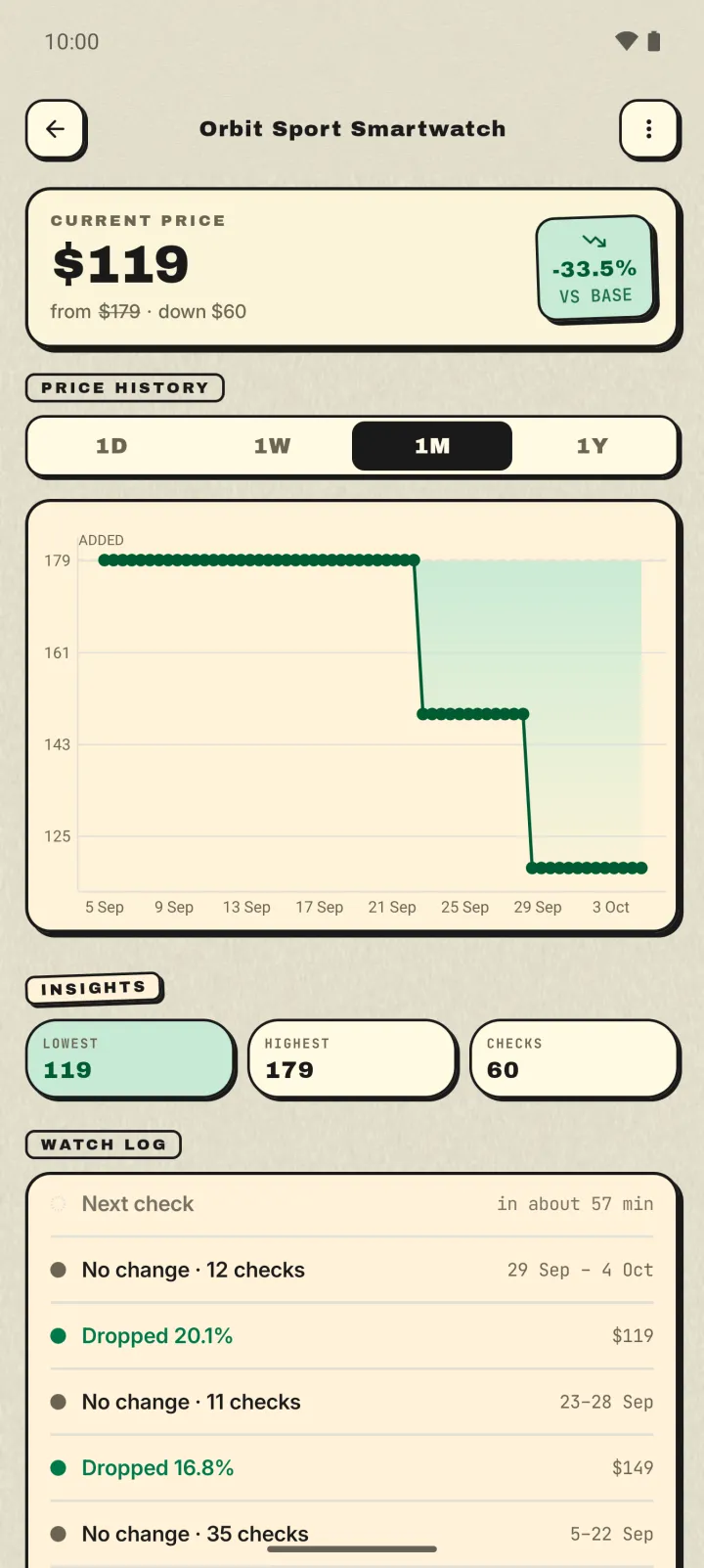
Read it in three steps:
- Find the usual price. Where does the line spend most of its time? That's the honest "was" price.
- Look for a recent bump. A rise shortly before the sale means the discount is measured from the top of that rise.
- Compare with the recorded low. If the sale price is at or above the lowest price you've already seen, nothing special is happening.
Droplert builds this history from the day you start tracking. It doesn't fill in the past, so the habit that pays off is adding items when you first think about them, not on the day of the sale. Share the product to Droplert, tap the price, and let it check on a schedule. The free plan keeps 30 days of history, and the optional upgrade keeps a year.
A checklist before you buy
- Is the "was" price the shop's own recent price, or a list price or someone else's price?
- What has the item actually sold for over the last few weeks? Check your tracker's history.
- Did the price rise just before the sale? If so, judge the discount from the price before the rise.
- Is it cheaper anywhere else? Track the same model at two or three shops. See guides for Amazon, Flipkart and any other website.
- Is it the exact same product? Match the model number, size and spec.
- What's the total? Delivery, fees and returns can cancel out a small discount.
- Would you buy it at this price without the badge? If not, the badge is doing the selling.
Questions
How can I check the price history of a product?
Some stores have dedicated history sites, but most don't. A tracker like Droplert records the price on any shop page from the day you add it, so you build your own history.
Are all Black Friday deals fake?
No. Plenty are real. The point is to know which is which. See the Black Friday price tracking plan for timing.
Can Droplert tell me a discount is fake?
No. It shows you the prices it has recorded, with the highest and lowest marked. Comparing that with the shop's "was" price is up to you, and usually takes a few seconds.
Do I need an account?
No. Droplert has no sign-up, and your data stays on your phone. It runs on Android 10 and newer.